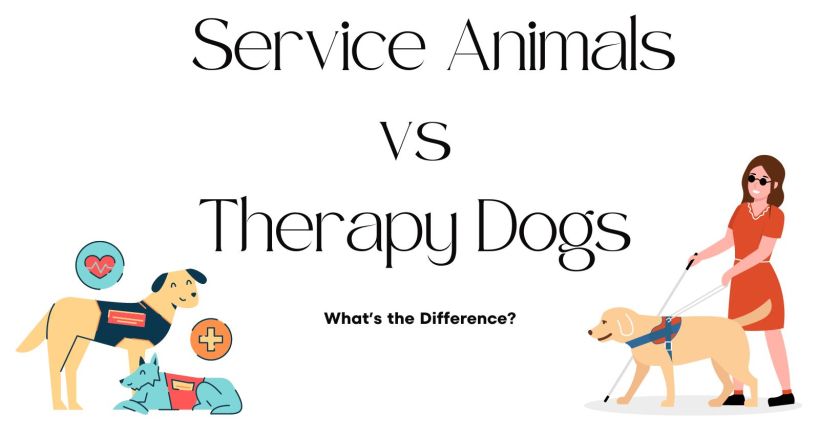
I enjoy bringing Dixie Rose to dog-friendly stores and restaurants, but pups aren’t welcome everywhere. I’m always a little skeptical when I see someone with their dog sporting a $17 Amazon special harness and boldly marching past the store greeter with a “dare you to stop me” confidence.
Service Animals
The truth is that dogs are service animals under titles II and III of the ADA. The Americans with Disabilities Act is not an “option” it’s a Federal law. The law defines a service animal (dog) as “dogs that are individually trained to do work or perform tasks for people with disabilities.”
Under the ADA, State and local governments, businesses, and nonprofit organizations that serve the public generally must allow service animals to accompany people with disabilities in all areas of the facility where the public is allowed to go.
Since the public isn’t allowed everywhere, there are places a service dog can’t go, at least without permission. A service dog must be on a leash and under the handler’s control.
Staff are never allowed to
- request any documentation for the dog
- require that the dog demonstrate its task
- inquire about the nature of the person’s disability
You Can Ask 2 Questions
If you’re a business owner, you have permission to ask 2 questions of the patron with their service animal.
- Is this service dog required because of a disability?
- What work has the dog been trained to perform?
You may not…
- Deny entrance because you fear dogs.
- Deny entrance because you are allergic.
- Deny entrance because of health codes.
- Place the patron and dog in a separate area of the establishment.
- Charge an extra fee for the service dog, even if you consistently charge an extra fee for a pet (hotel, rental, etc.)
You may, however, ask the owner and animal to leave if they are not housebroken or if the dog is out of control.
For full ADA Requirements, visit the U.S. Department of Justice Civil Rights Division Service Animals page
Does the ADA require that service animals be certified as service animals?
No. Covered entities may not require documentation, such as proof that the animal has been certified, trained, or licensed as a service animal, as a condition for entry.
Some individuals and organizations sell service animal certification or registration documents online. These documents do not convey any rights under the ADA and the Department of Justice does not recognize them as proof that the dog is a service animal.
Therapy Dog
(ADA Government FAQ for Service Dogs)
Are emotional support, therapy, comfort, or companion animals considered service animals under the ADA?
No. These terms are used to describe animals that provide comfort just by being with a person. Because they have not been trained to perform a specific job or task, they do not qualify as service animals under the ADA. However, some State or local governments have laws that allow people to take emotional support animals into public places. You may check with your State and local government agencies to learn about these laws.
If someone’s dog calms them when having an anxiety attack, does this qualify it as a service animal?
It depends. The ADA makes a distinction between psychiatric service animals and emotional support animals. If the dog has been trained to sense that an anxiety attack is about to happen and take a specific action to help avoid the attack or lessen its impact, that would qualify as a service animal. However, if the dog’s mere presence provides comfort, that would not be considered a service animal under the ADA.
Does the ADA require service animals to be professionally trained?
No. People with disabilities have the right to train the dog themselves and are not required to use a professional service dog training program.
Are service-animals-in-training considered service animals under the ADA?
No. Under the ADA, the dog must already be trained before it can be taken into public places. However, some State or local laws cover animals that are still in training.
Do service animals have to wear a vest or patch or special harness identifying them as service animals?
No. The ADA does not require service animals to wear a vest, ID tag, or specific harness.

 Golden Retriever Puppies