
We’ve been careful and fortunate that we’ve gone 3 years without a hot spot; that lucky streak ended this week. This post shares what I’ve learned during this process.
Golden Retrievers are known for their friendly nature, loyal companionship, and gorgeous golden coats. But with that beautiful fur comes the responsibility of proper skin and coat care. One common issue many Golden Retriever owners encounter is hot spots. These red, inflamed, and irritated patches of skin can appear suddenly and cause significant discomfort for your dog.
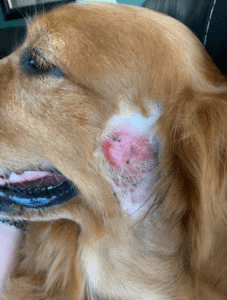
What Are Hot Spots?
Hot spots, also known as acute moist dermatitis, are areas of inflamed skin that become red, irritated, and often infected. These patches can appear almost anywhere on your dog’s body but are most commonly found on the head, neck, hips, and limbs. Hot spots are generally circular, moist, and painful, causing your dog to itch, lick, and chew at the area, making the problem worse.
Golden Retrievers, with their thick coats, are particularly prone to developing hot spots, especially during warmer months when their skin can become more prone to irritation.
Causes of Hot Spots in Golden Retrievers
Many factors can trigger hot spots, and in Golden Retrievers, these can range from environmental irritants to underlying health issues.
Common causes include:
1. Allergies
Golden Retrievers, like many other breeds, can suffer from various types of allergies, including food allergies, environmental allergies (such as pollen or dust mites), and flea allergies. When your dog experiences an allergic reaction, their skin may become itchy, leading them to scratch or lick excessively. This can eventually result in the formation of hot spots.
2. Moisture Trapped in the Coat
Golden Retrievers have dense, water-resistant coats that can trap moisture. After swimming, bathing, or being out in the rain, if your dog’s coat isn’t thoroughly dried, this moisture can cause skin irritation. The damp environment encourages bacteria growth, leading to infections that can quickly turn into hot spots.
3. Insect Bites or Parasites
Fleas, ticks, and other parasites can cause intense itching and irritation, particularly if your Golden Retriever is allergic to flea saliva. Constant scratching and biting at the affected area can damage the skin, allowing bacteria to enter and create a hot spot.
4. Poor Grooming
Golden Retrievers require regular grooming to prevent mats and tangles, which can trap dirt, debris, and moisture against the skin. Poor grooming can also prevent you from noticing early signs of skin irritation or infection, which may worsen over time and lead to hot spots.
5. Stress and Anxiety
Like humans, dogs can suffer from stress and anxiety, which may manifest as excessive licking or chewing of their skin. This compulsive behavior can damage the skin and cause hot spots to form, particularly if the behavior goes unnoticed or untreated for an extended period.
6. Underlying Skin Conditions
Some Golden Retrievers may develop hot spots due to underlying skin conditions such as dermatitis, fungal infections, or autoimmune diseases. These conditions can cause chronic skin irritation, making your dog more susceptible to hot spots.
In our case, I think that Dixie Rose’s hot spot formed where she had an injury. A few days prior to the appearance of her hot spot, she had a rough-and-tumble play date with her BFF puppy friend Tux. For hours they sparred and wrestled, so I wasn’t at all alarmed to notice a small injury on her cheek. It was the size of a pea when I discovered it. Today, several days later, it’s the size of a cherry tomato.
Symptoms of Hot Spots
Recognizing the signs of hot spots in your Golden Retriever is crucial for early intervention and treatment. The following symptoms are common indicators:
- Red, inflamed skin: The affected area will often appear red and swollen.
- Moist or oozing patches: Hot spots are typically wet and may ooze pus or fluid due to infection.
- Constant scratching, licking, or chewing: Your dog may be visibly uncomfortable and frequently scratching or biting at the area.
- Hair loss around the hot spot: As your dog licks or chews the affected area, the fur may fall out or be pulled away, leaving the skin exposed.
- Unpleasant odor: Infected hot spots may emit a foul smell due to the buildup of bacteria.
Prevention of Hot Spots
While hot spots are common in Golden Retrievers, there are several steps you can take to prevent them from occurring.
1. Regular Grooming
One of the best ways to prevent hot spots is through consistent grooming. Regularly brushing your dog’s coat will help remove loose fur, prevent mats and tangles, and ensure proper airflow to the skin. Be sure to pay special attention to areas that tend to trap moisture, such as the neck, under the collar, and the tail area.
Additionally, Golden Retrievers benefit from regular baths using a gentle, hypoallergenic dog shampoo. After bathing, make sure to thoroughly dry your dog’s coat to prevent moisture from getting trapped.
2. Check for Parasites
Keep your Golden Retriever on a regular flea and tick prevention program. Fleas and ticks are major culprits when it comes to skin irritation and hot spots. Regularly inspect your dog’s coat for signs of parasites, especially after spending time outdoors.
3. Monitor for Allergies
If your dog has known allergies, work with your veterinarian to manage them effectively. This may involve changing your dog’s diet, limiting exposure to certain environmental allergens, or using allergy medications. Proper allergy management can greatly reduce the risk of hot spots developing.
4. Proper Hydration and Diet
Ensure your Golden Retriever is getting enough water and a balanced diet rich in omega-3 fatty acids, which can promote healthy skin and coat. Speak with your vet about dietary supplements or changes that might benefit your dog’s skin health.
5. Reduce Stress
If your dog is prone to anxiety or stress, find ways to reduce these triggers. Providing plenty of exercise, mental stimulation, and positive interactions can help. In more severe cases, calming products or medications may be needed, but consult your vet before introducing any treatments.
Treatment of Hot Spots
If your Golden Retriever develops a hot spot, swift treatment is essential to prevent further discomfort and infection. Here’s what you can do:
1. Trim the Hair Around the Hot Spot
Carefully trim the fur around the affected area to prevent additional irritation and allow the skin to breathe. This also makes it easier to clean and treat the wound.
2. Clean the Area
Use a gentle, antiseptic solution recommended by your vet to clean the hot spot. This will help remove any bacteria and reduce the risk of infection.
3. Apply Medication
Your veterinarian may recommend topical treatments, such as medicated creams or sprays, to soothe the skin and promote healing. In some cases, oral antibiotics or anti-inflammatory medications may be prescribed if the infection is severe.
4. Prevent Further Irritation
To stop your dog from licking or scratching the hot spot, you may need to use an Elizabethan collar (also known as the “cone of shame”) until the area heals.
5. Visit Your Vet
While mild hot spots can sometimes be treated at home, it’s always a good idea to consult with your veterinarian, especially if the hot spot is large, recurring, or shows signs of severe infection.
Conclusion
Hot spots are a common skin issue in Golden Retrievers, but with proper care, you can treat them or even help prevent them from occurring. By maintaining good grooming habits, keeping your dog’s coat clean and dry, managing allergies and parasites, and ensuring your dog leads a stress-free life, you can keep your Golden Retriever’s skin healthy and free from hot spots. And when they do occur, quick and effective treatment can help your dog heal quickly, returning them to their happy, playful self.

 Golden Retriever Puppies